Most businesses come to us asking for a new logo. What they actually need is a brand system.
That sounds like a small distinction, but it is the one that separates work that holds together as a business grows from work that quietly falls apart the moment more than one person has to use it.
Where one-off logo projects break down
A logo by itself is a single asset. It’s useful, but it isn’t a system. The moment you need a new pitch deck, a new email template, a new ad, or a new product page, someone has to interpret the logo into something it was never specifically built to be. Without a wider system, those interpretations diverge fast.
We see the same pattern again and again. The business commissions a logo, runs a launch campaign, and feels good about the new look. Six months later, the marketing team has produced fifteen presentations that look like fifteen different companies, the agency partner is using a different colour palette, and someone in a regional office has redrawn the logo because they couldn’t find the proper file.
None of that means the design was bad. It means there was nothing underneath it.
What a brand system actually is
A brand system is the underlying structure that makes a brand usable in practice. It includes the things you would expect, like logo files, type, colour, and grids. But the more important parts are the rules, components, templates, and tooling that help people across the business apply the brand consistently without having to think about it.
A good brand system answers questions before they get asked. What does a chart look like? What does a quote graphic look like on social? How should imagery be cropped for the homepage? What does the brand sound like in an internal memo, versus a press release, versus a product UI? When the system gets these things right, people can move quickly and produce good work without needing to consult a designer for every decision.
When the system gets it wrong, or does not exist at all, every new application becomes a new decision, and the brand drifts.
Why this matters more as you scale
A small team can hold a brand together with taste alone. Once the team gets bigger, or you start working with external partners, or you open new markets, taste is no longer enough. You need shared rules and shared tools.
This is the moment we see businesses come back, often a couple of years after their original identity launch. The brand was strong at launch, but the work that has come after it hasn’t held the same standard. The fix is rarely another logo redesign. Usually it’s the system that should have been there in the first place.
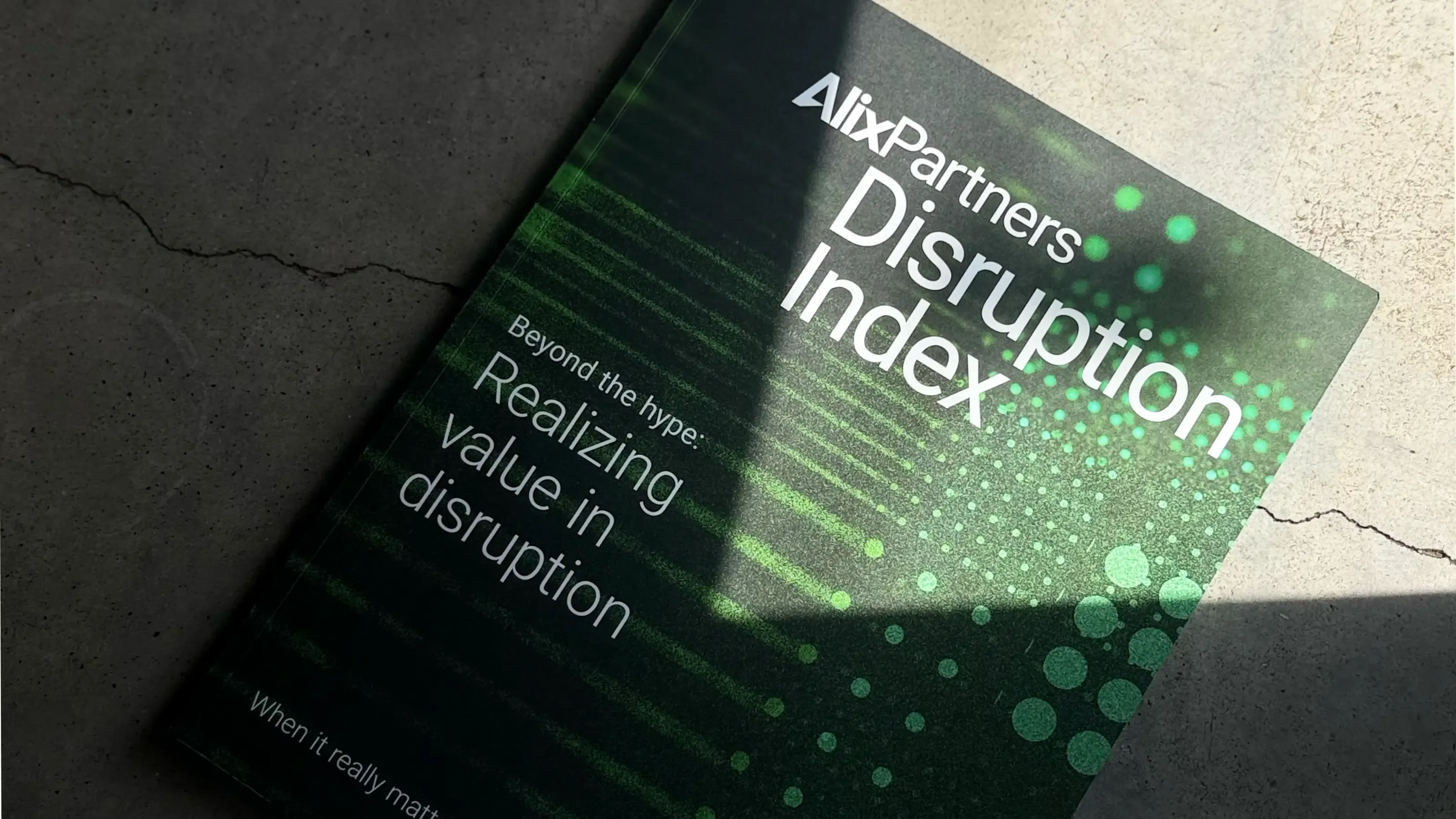
We worked with AlixPartners, the global consulting firm, on exactly this problem. They had a strong existing identity but needed something more flexible and usable for thousands of employees across multiple offices. We built a generative brand tool, a comprehensive set of guidelines, and a more dynamic visual language designed to scale rather than constrain. The system gave teams across the business room to produce variety while staying recognisably AlixPartners.
Similar logic underpinned our work with MediaViz and YakChat. In both cases, the brand needed to live across marketing, product, and an evolving feature set. Without a system behind it, the identity would not have held up.
What this means in practice
If you are commissioning brand work, the most useful question isn’t what the logo will look like, but how the brand will work once it’s in use.
Ask what the components are. Ask how new applications will get made, and who keeps the system alive once the agency steps back. What happens when the team grows, a new product launches, or an external partner needs to produce something on your behalf?
The honest answer is rarely a logo. It’s almost always a system, with documentation, templates, and a way to keep it useful as the business changes.
That is also why we tend to talk about brand identity and brand systems as connected pieces of work, rather than separate services. The identity sets the tone. The system is what lets it survive contact with the real world.
The shorthand we use internally
We have a phrase we lean on with clients. A logo is a moment. A system is a way of working.
Logos get applauded at launch and forgotten in the daily grind. Systems get used every day. The work that scales well is the work that takes the system seriously from the start.
If your business has outgrown a logo-only identity, or you’re about to commission a refresh and want to do it properly this time, start a conversation with us. It’s the kind of work we do most.