One of the nicest things about growing Bodkin is seeing how each new person brings something different into the studio.
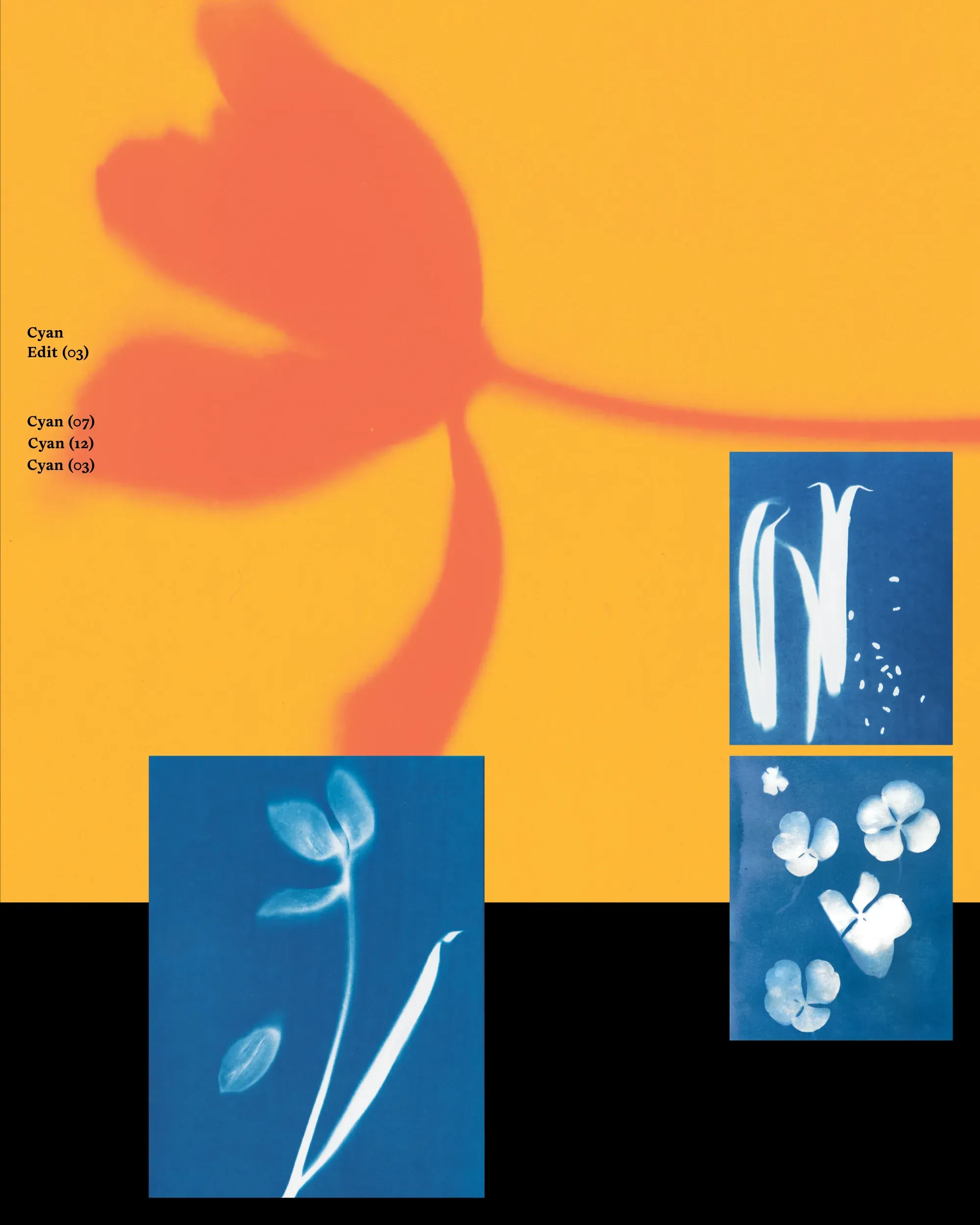
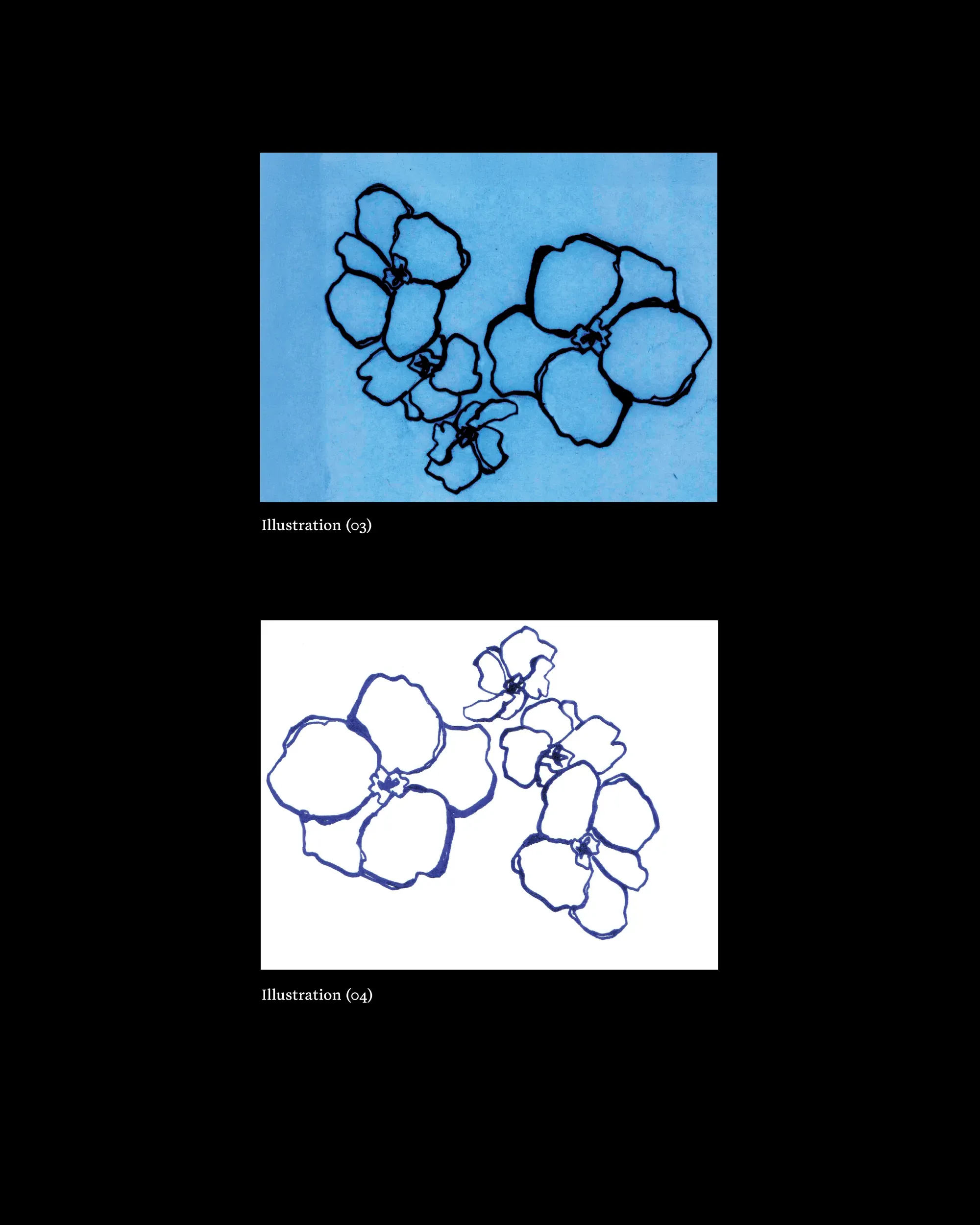
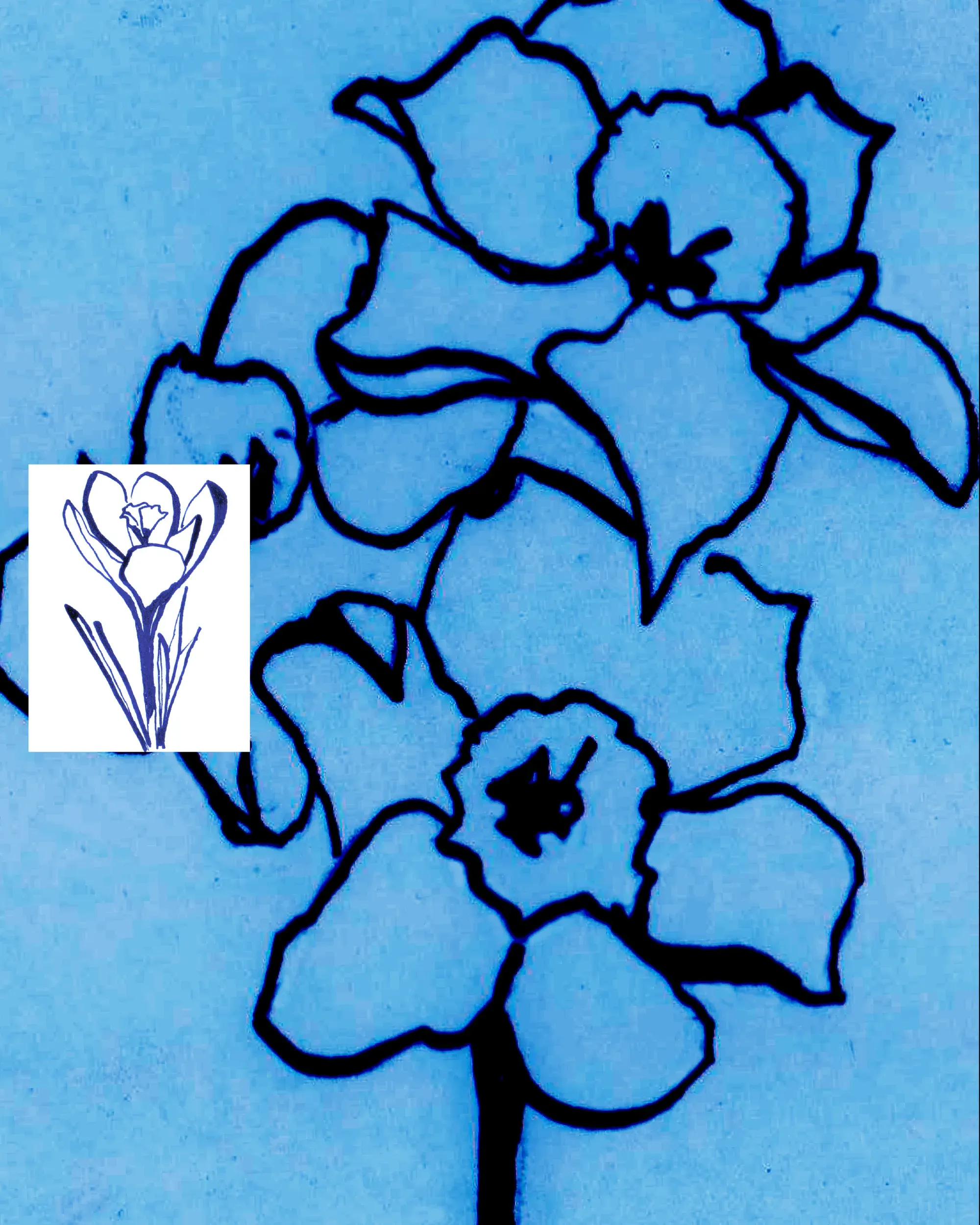
Hollie joined us as a graphic designer earlier this year, and her hands-on, analogue approach has felt really fresh for us. She works with processes like cyanotypes, ink printing, leaf prints and illustration, using natural forms, texture and chance to create imagery that feels tactile and full of life.
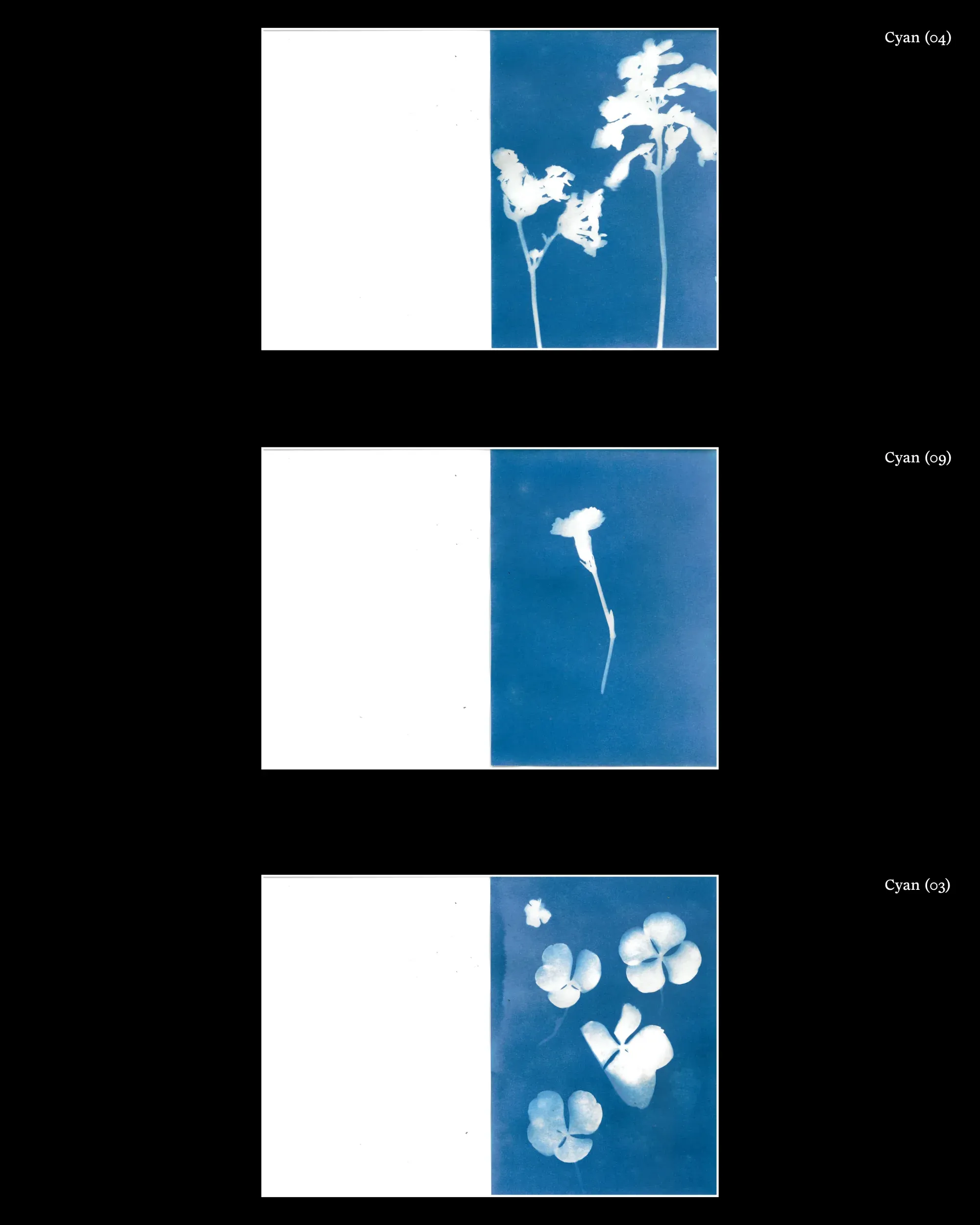
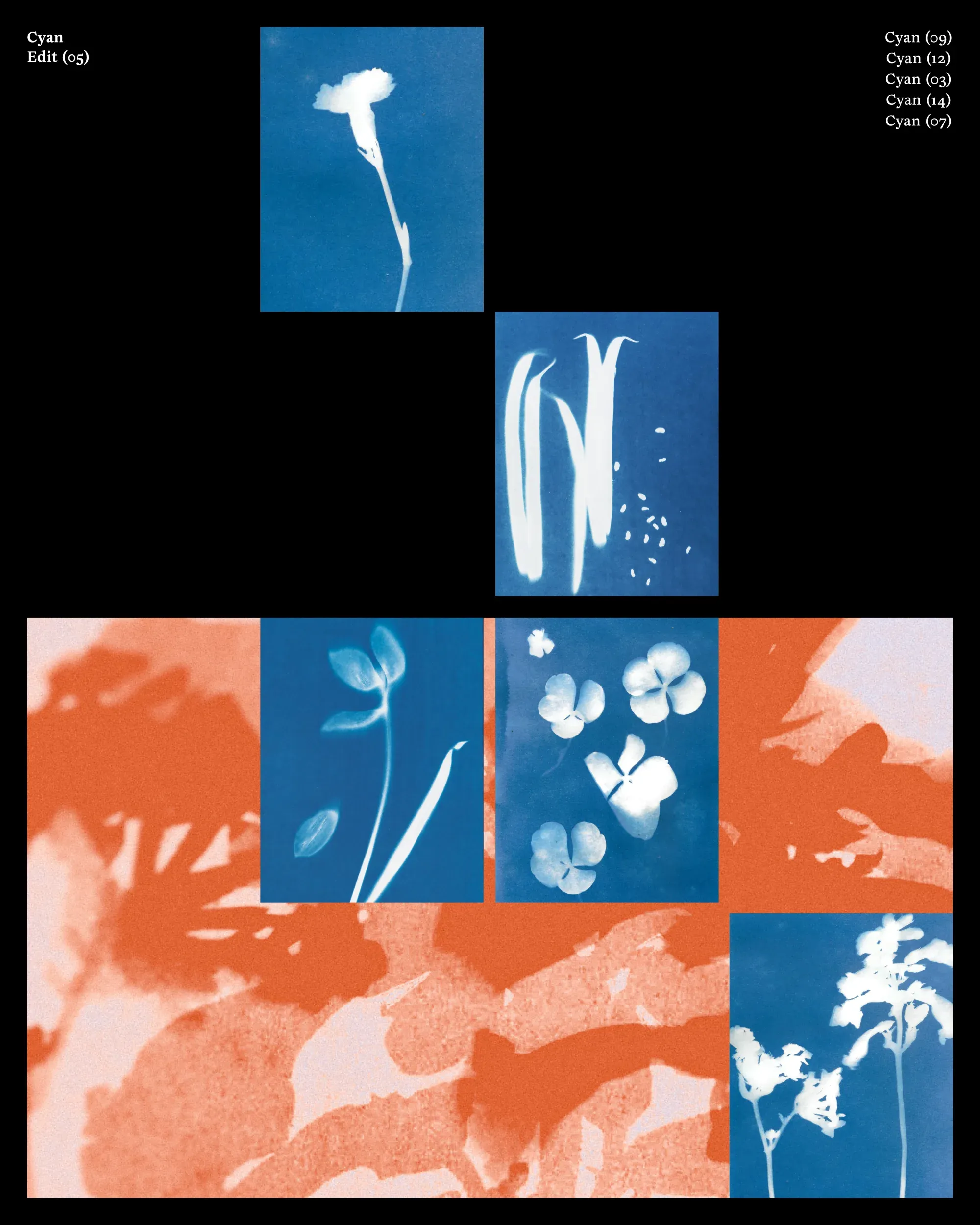
Letting the process decide
A cyanotype is one of the oldest photographic printing processes there is. You coat the paper, arrange the plants on top, expose it to light and wait. Ink printing works the same way in spirit: press a flower or a leaf into ink, press it onto paper, and see what survives the transfer. There is no undo. The materials get a say in the outcome.
That unpredictability is not a flaw in the process. For Hollie, it is the appeal.
What draws me to these processes is their unpredictability. I never quite know what the outcome will be, and that element of discovery is what makes them so intriguing.
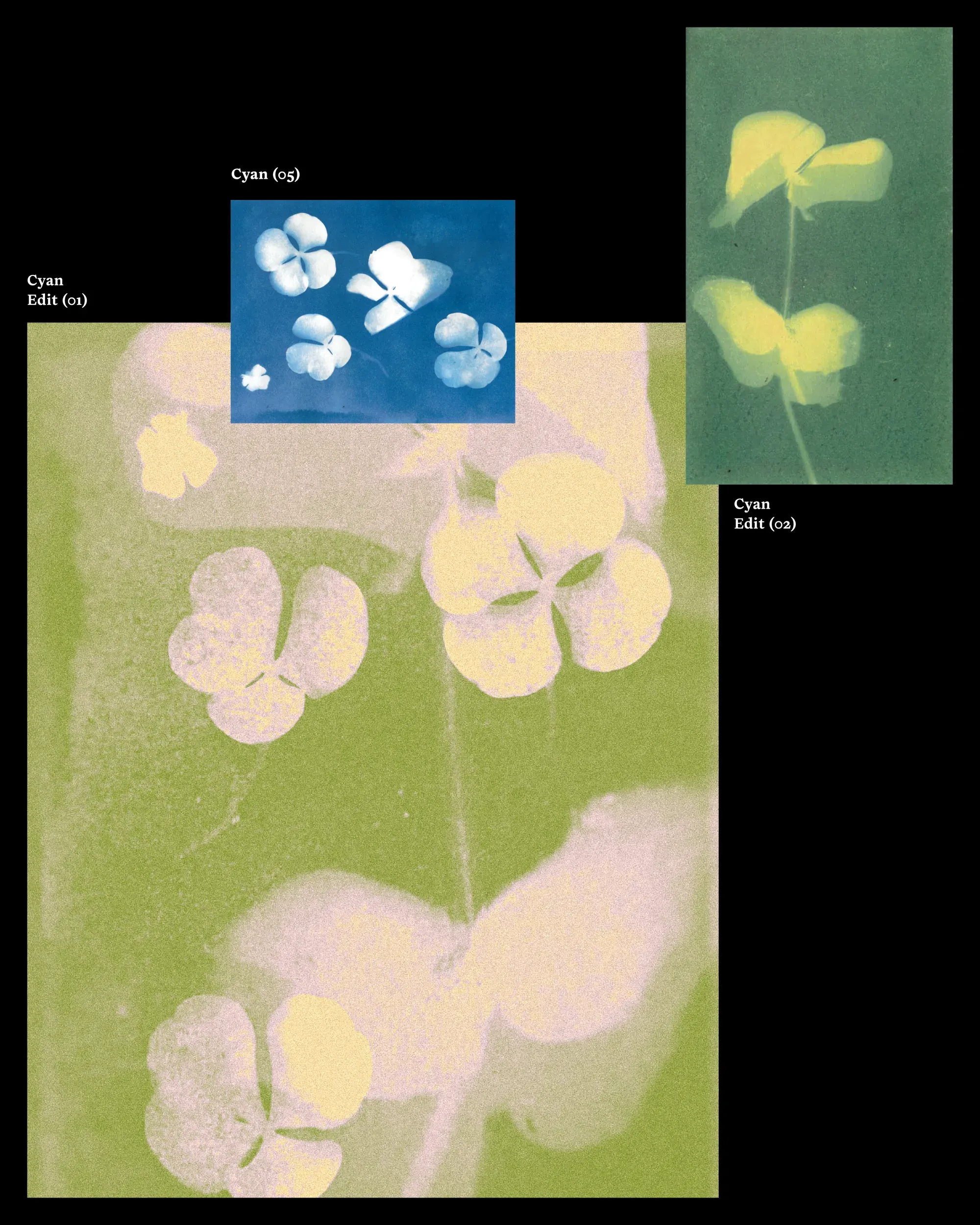
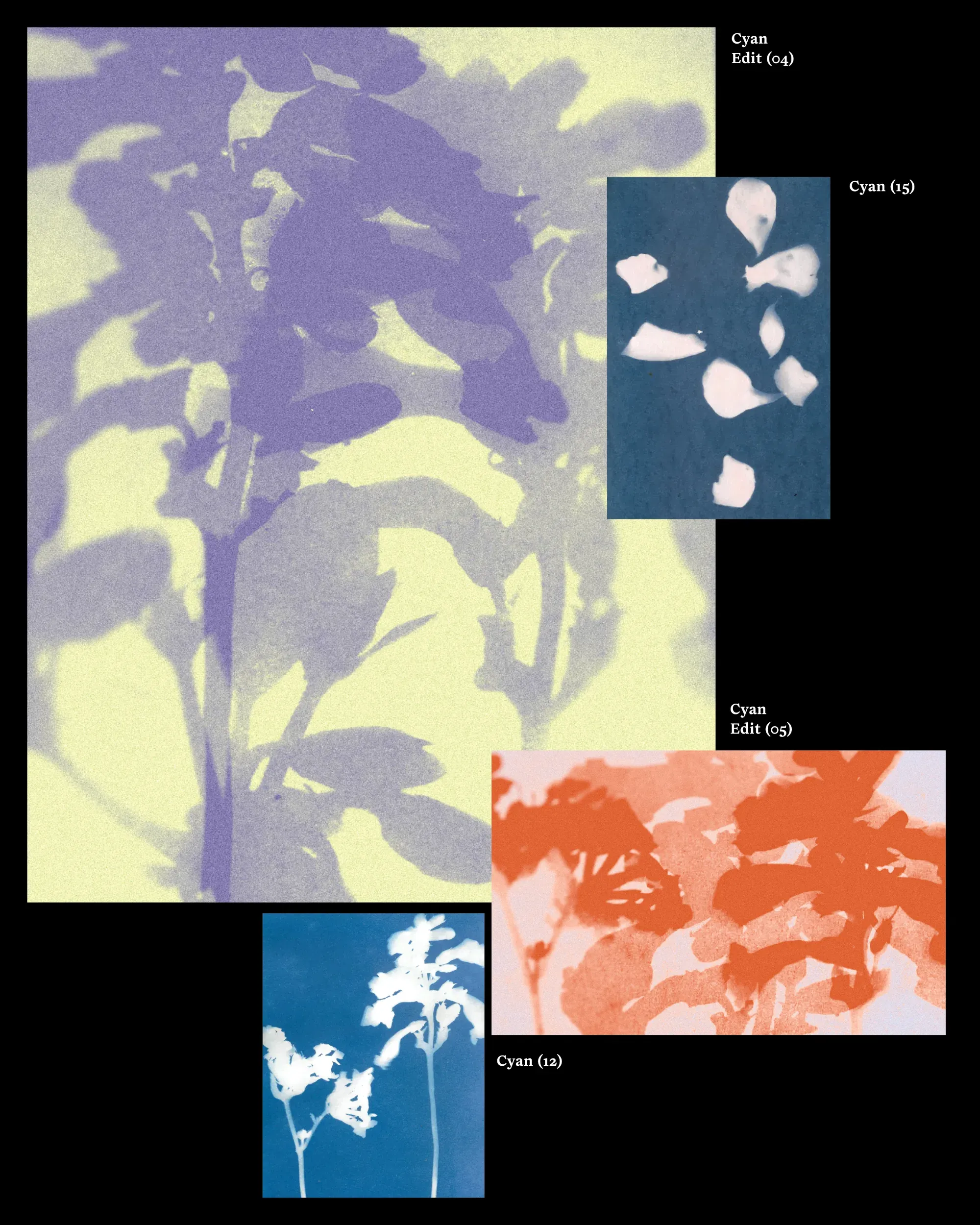
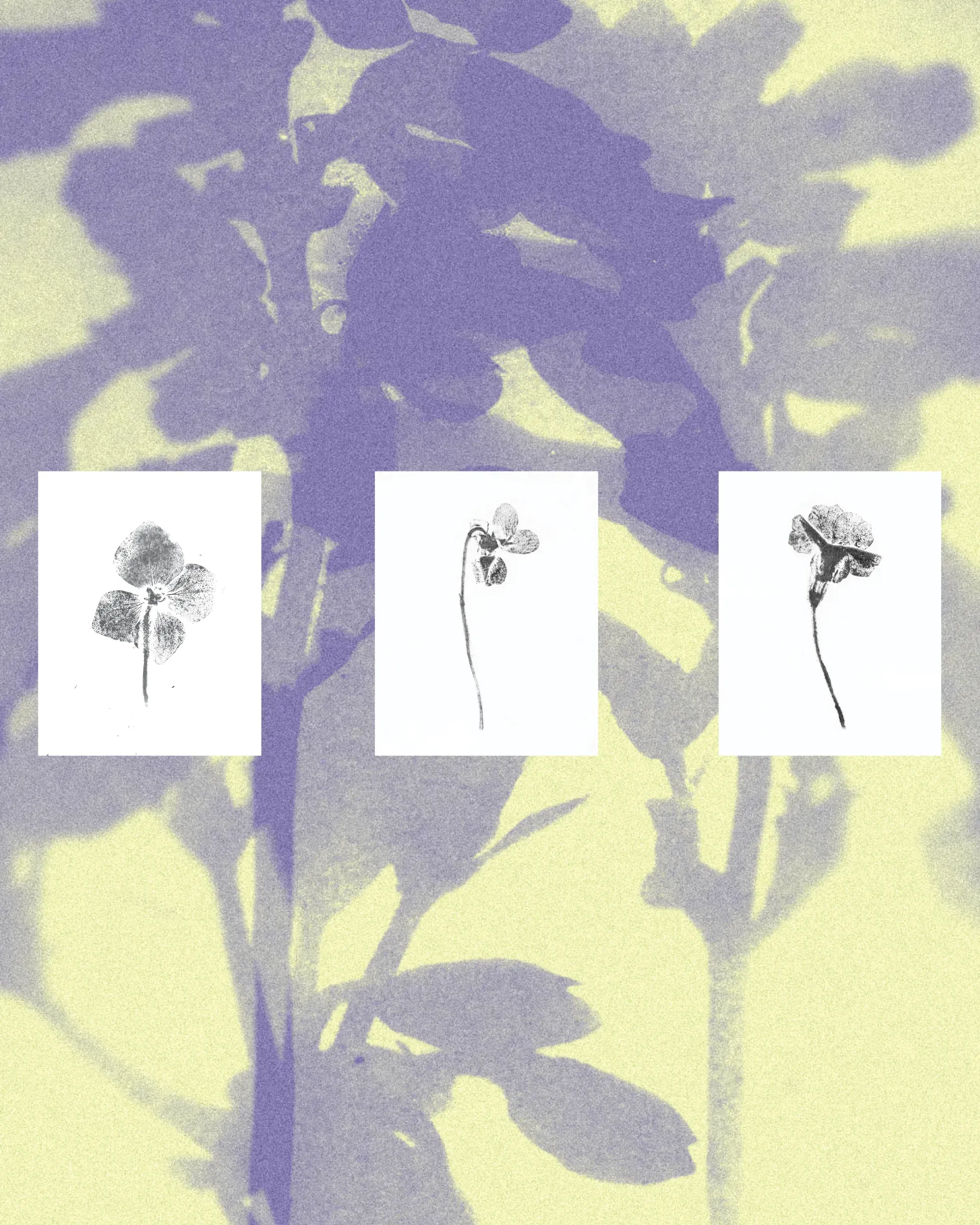
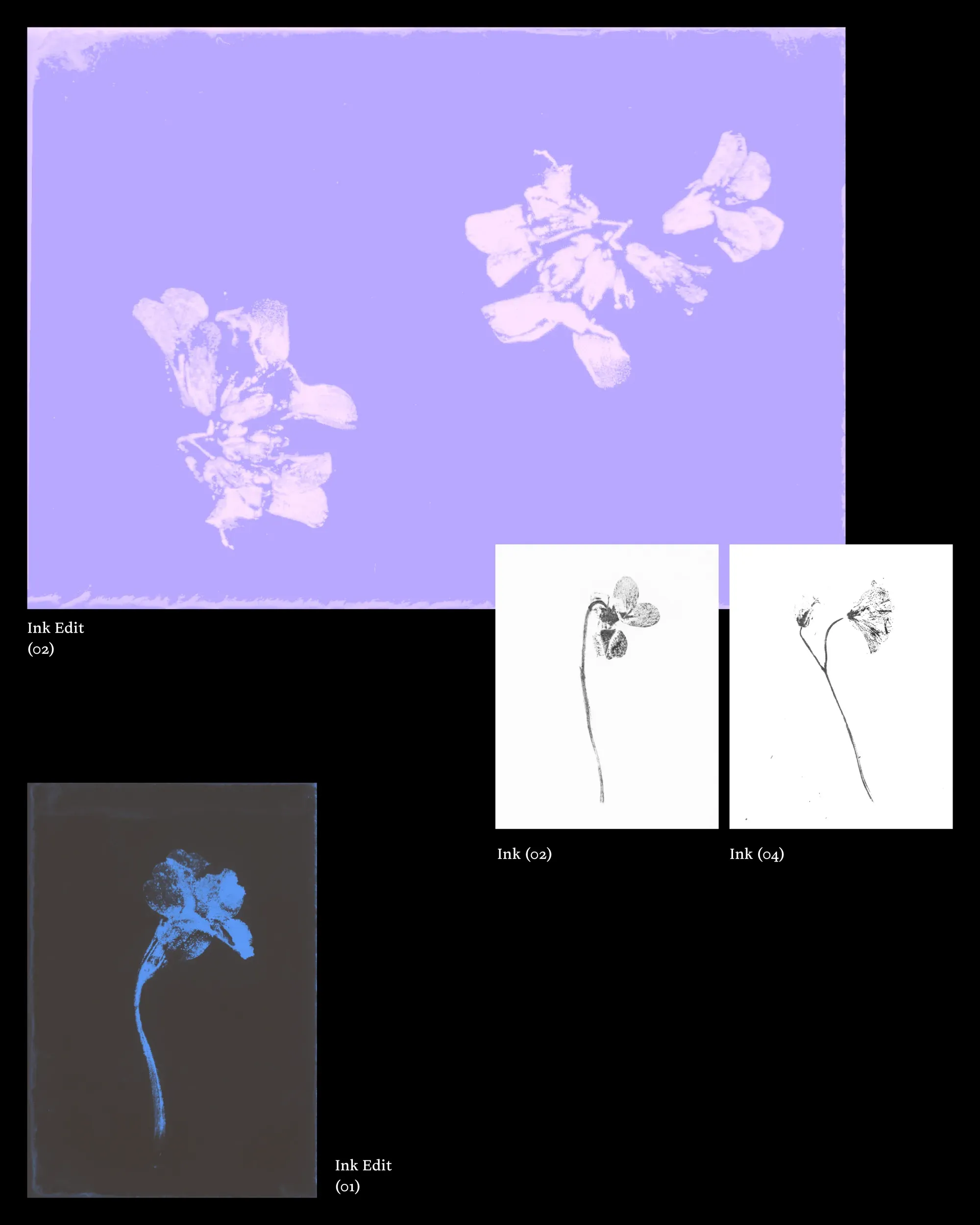
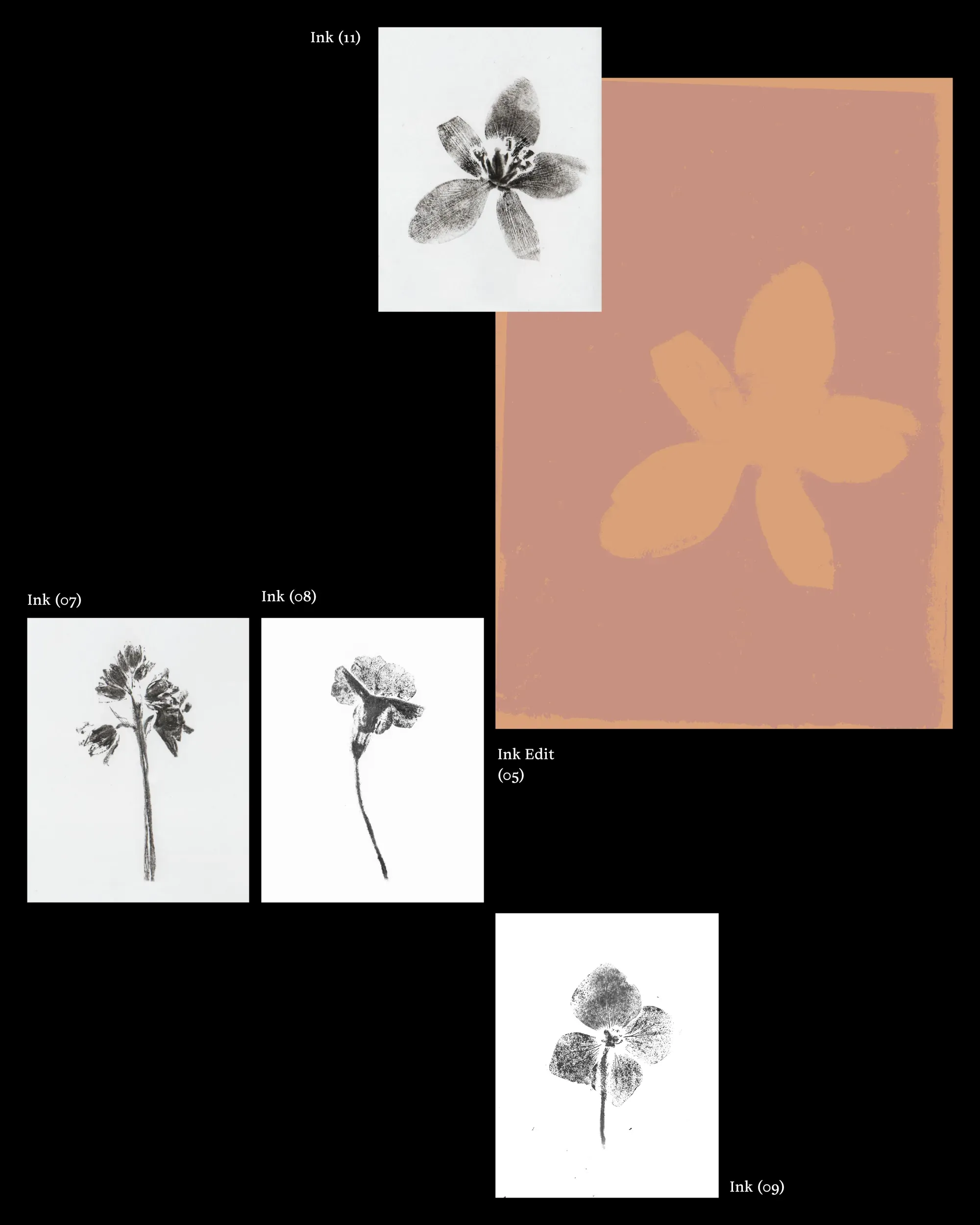
The ink prints hold an amazing amount of detail for something made by pressing a flower into paper. Veins, petal edges, the bend of a stem. Scanned and recoloured, they take on another life entirely.
Rosemary in Florescence
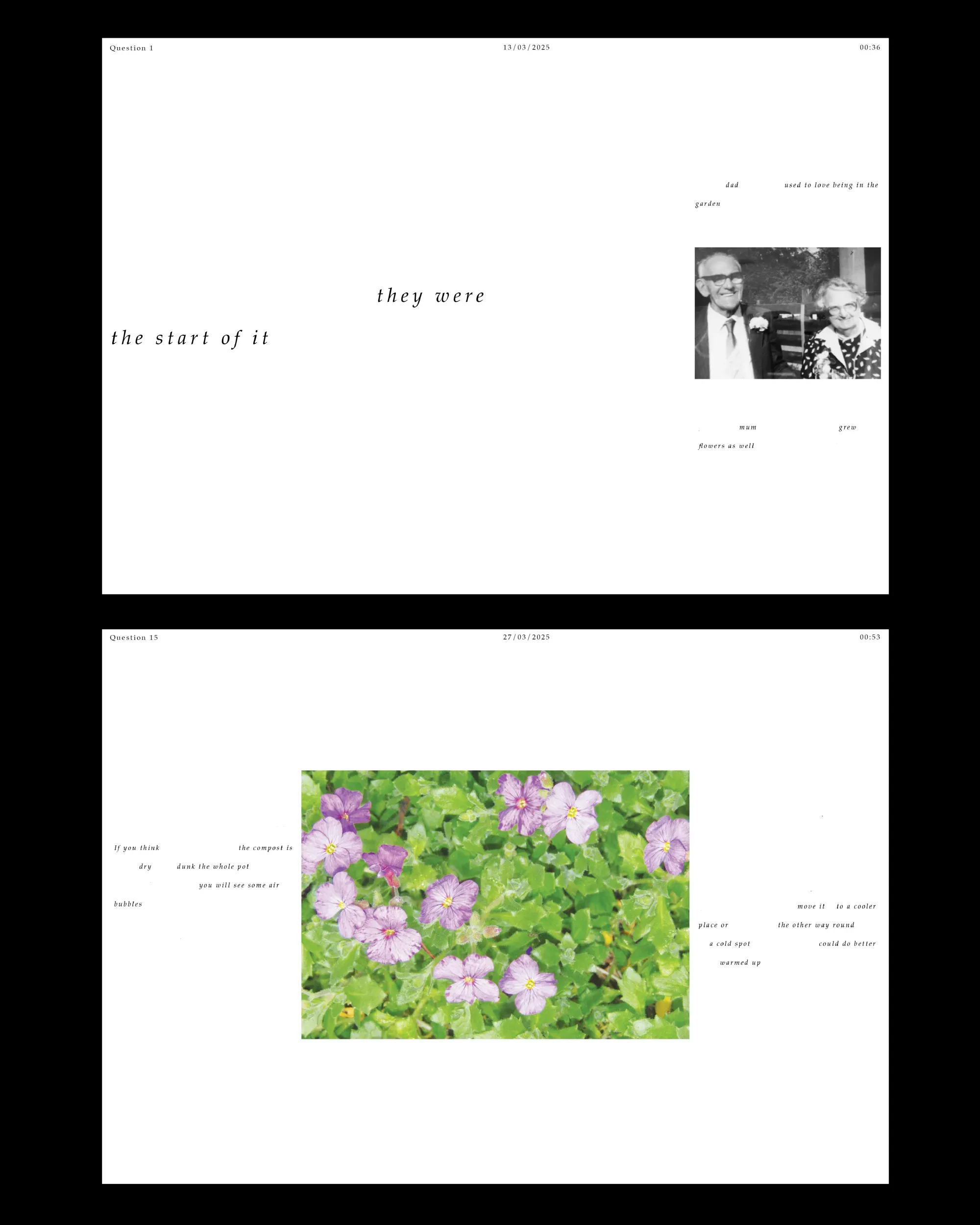
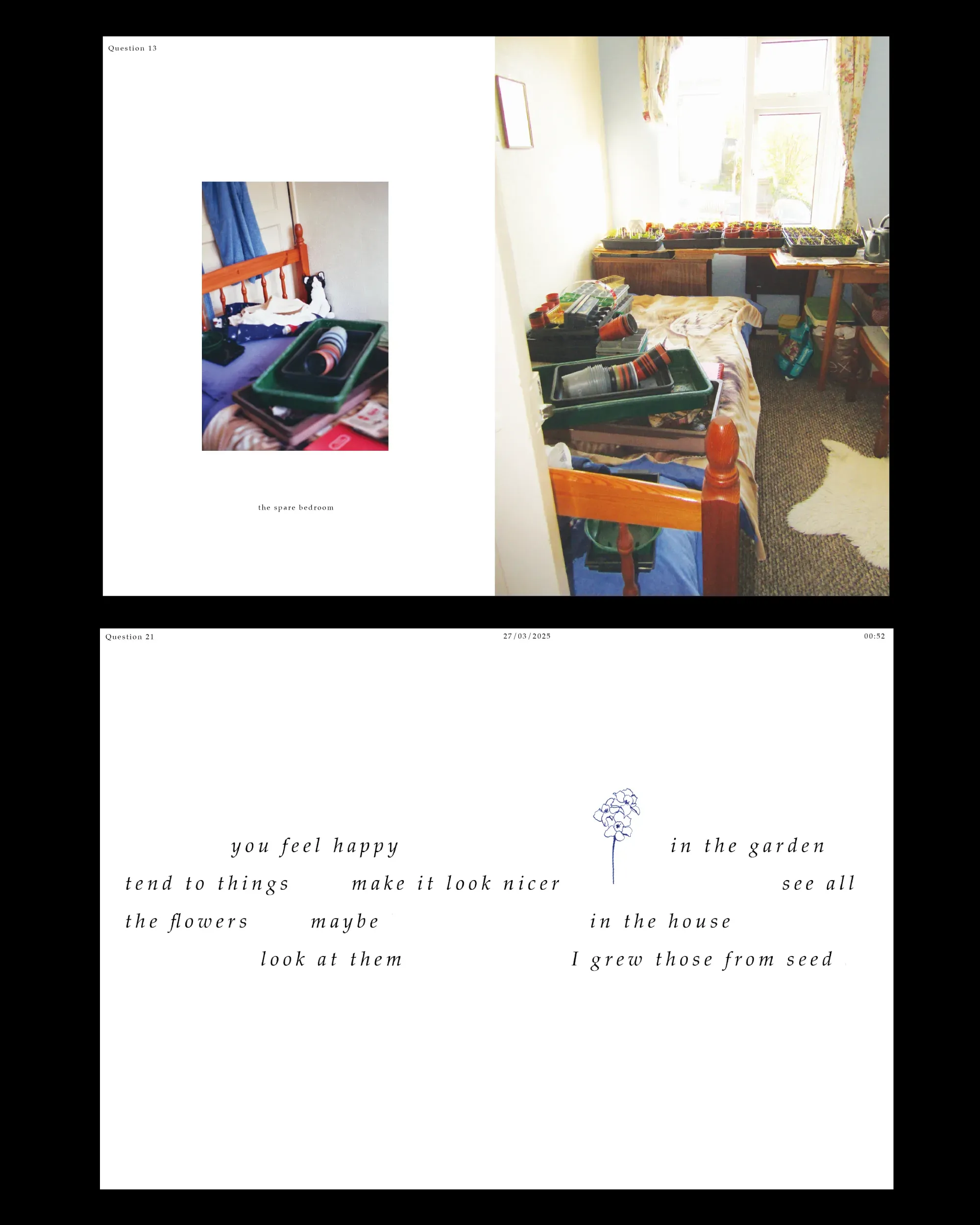
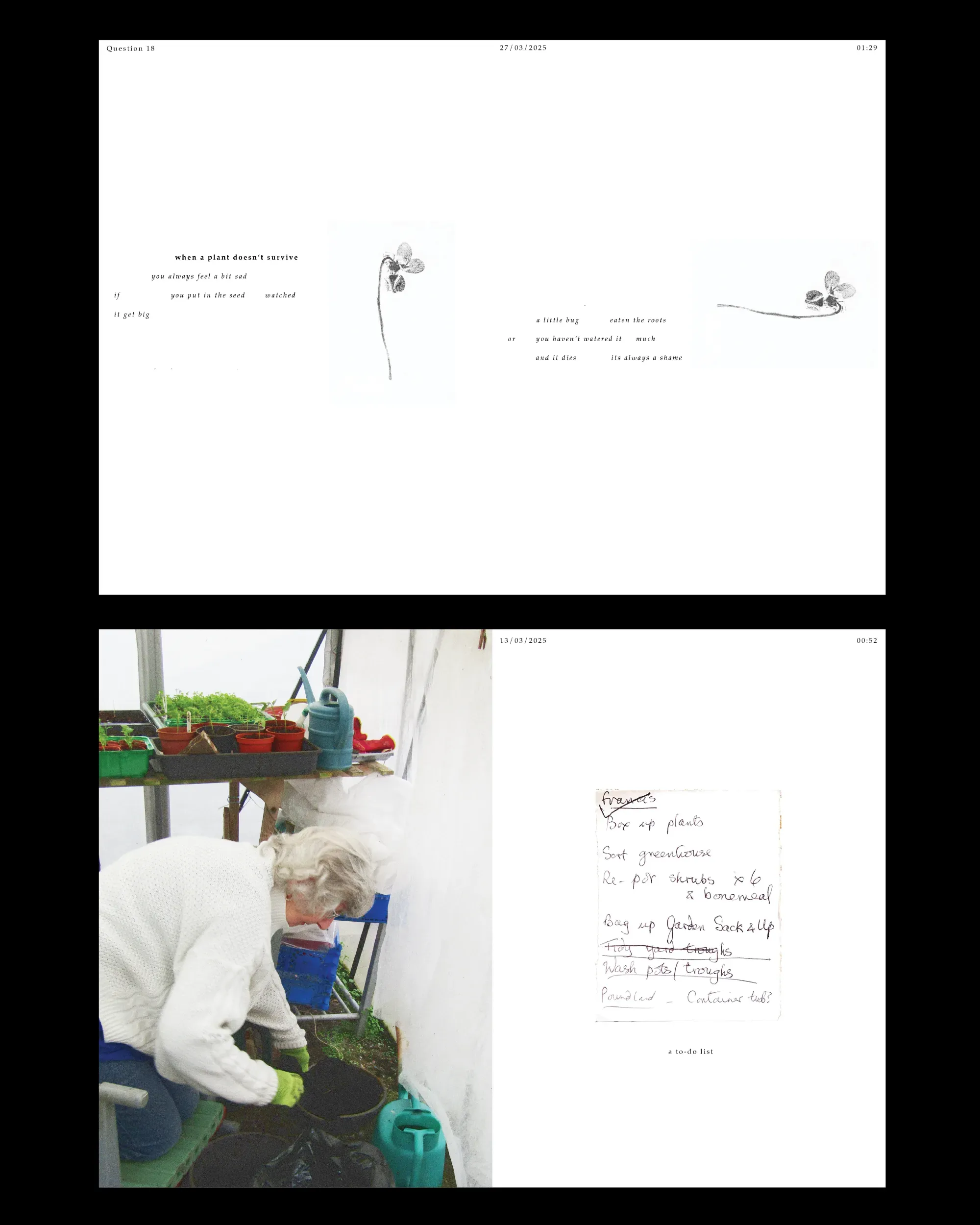
Some of the pieces here are from Hollie’s final university project, Rosemary in Florescence, a publication inspired by her elderly next-door neighbour’s lifelong love of gardening. Through image-making, materiality and storytelling, the book commemorates Rosemary’s devotion to her craft, and celebrates the beauty found in patience, care and growth.
It is a lovely piece of work. Interview fragments drift across the spreads the way conversation actually drifts, between photographs of the greenhouse, the spare bedroom full of seed trays, and a handwritten to-do list that says more about devotion than any caption could.
Feeding back into the studio
Others are from more recent explorations for one of our own projects, where that same way of thinking has started to feed into the work we’re doing at Bodkin.
It’s the kind of thing I was excited about when we hired her. Getting away from the screen, making things by hand, letting the process be a bit unpredictable and seeing where it takes you. We spend most of our working lives in brand systems and component libraries, and the work is better for having something growing at the other end of the desk that refuses to behave.
A lovely reminder that design doesn’t always need to start in Figma. Sometimes it starts with leaves, light, ink, paper and a bit of patience.
If you enjoyed this, our post on bringing Rudin’s stories to life through illustration covers another side of the studio’s image-making.